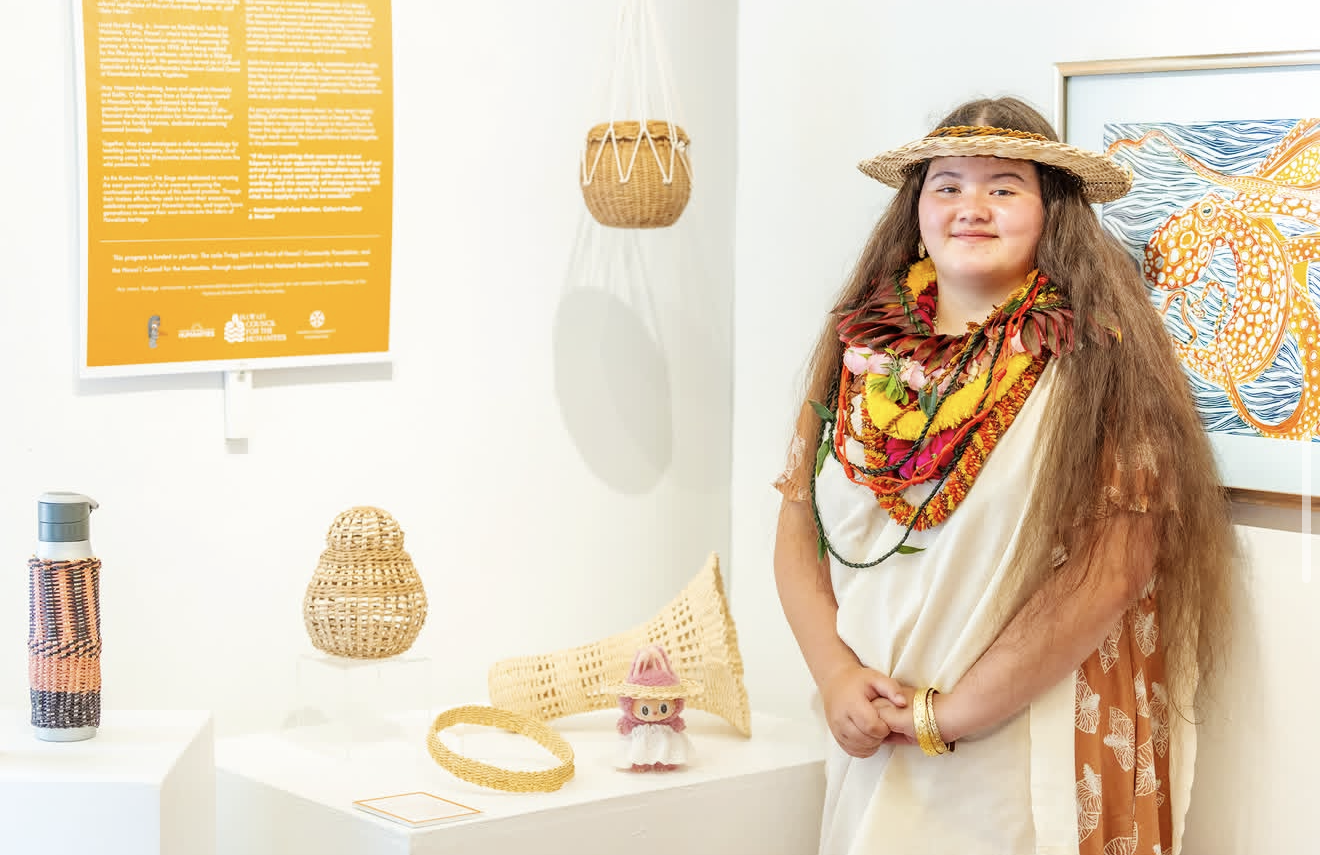
For Keolaonākaielua M, learning has always been rooted in place — in Maui, in family, and in the relationships that bind culture, history, and community together.
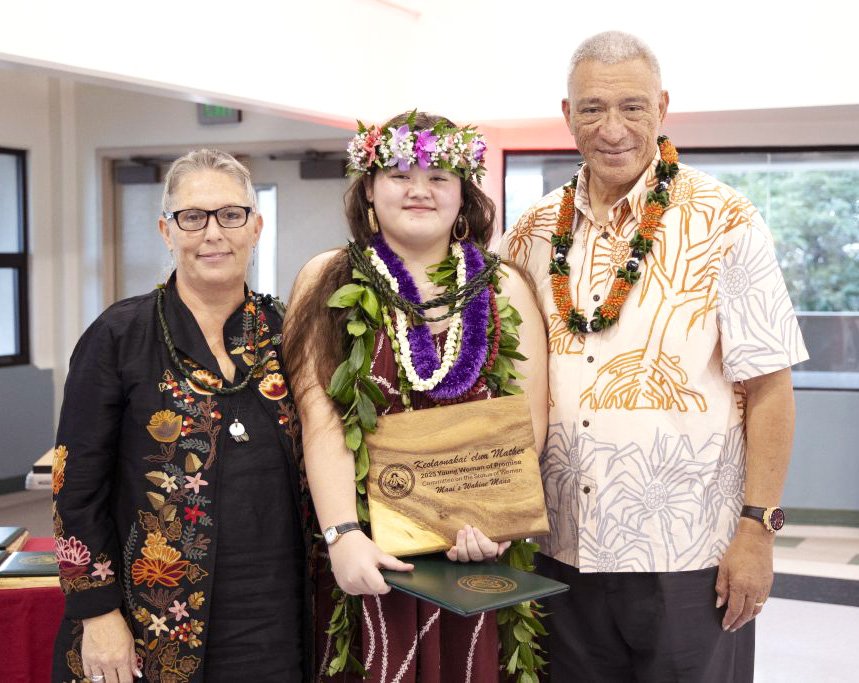
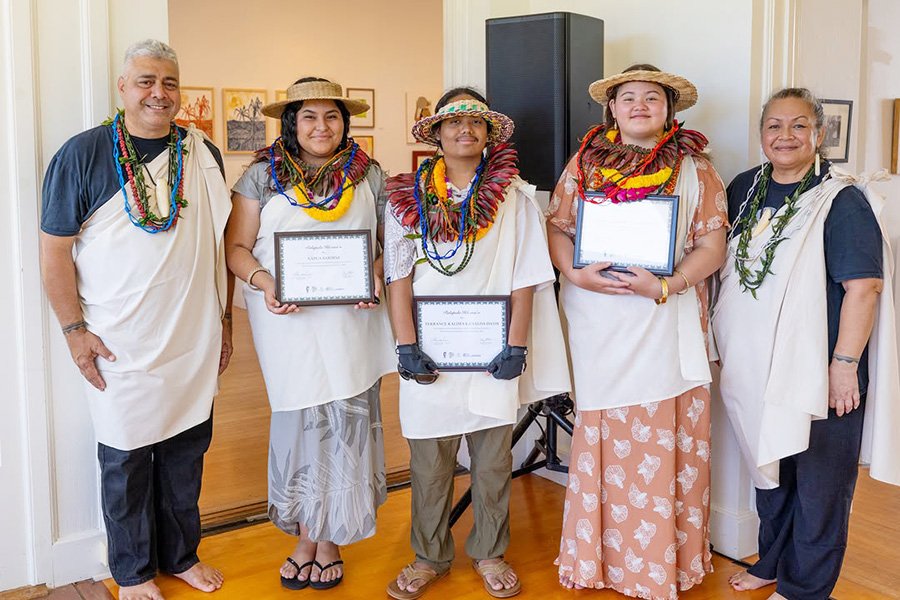
Now a sophomore on our Kīhei campus, Keola was recently recognized as a Young Woman of Promise by the Maui County Committee on the Status of Women for her journey into the practice of ulana ʻie and the responsibilities that come with it.
Raised in Lāhainā, Keola grew up on the grounds of the historic Waiola Church. Although she was always surrounded by Hawaiian culture, she did not always feel fully connected to it.
“I’m hapa, so because of my mixed heritage, I wasn’t always as secure in my role as kanaka,” she says. “I didn’t grow up speaking my language or knowing my genealogy.”
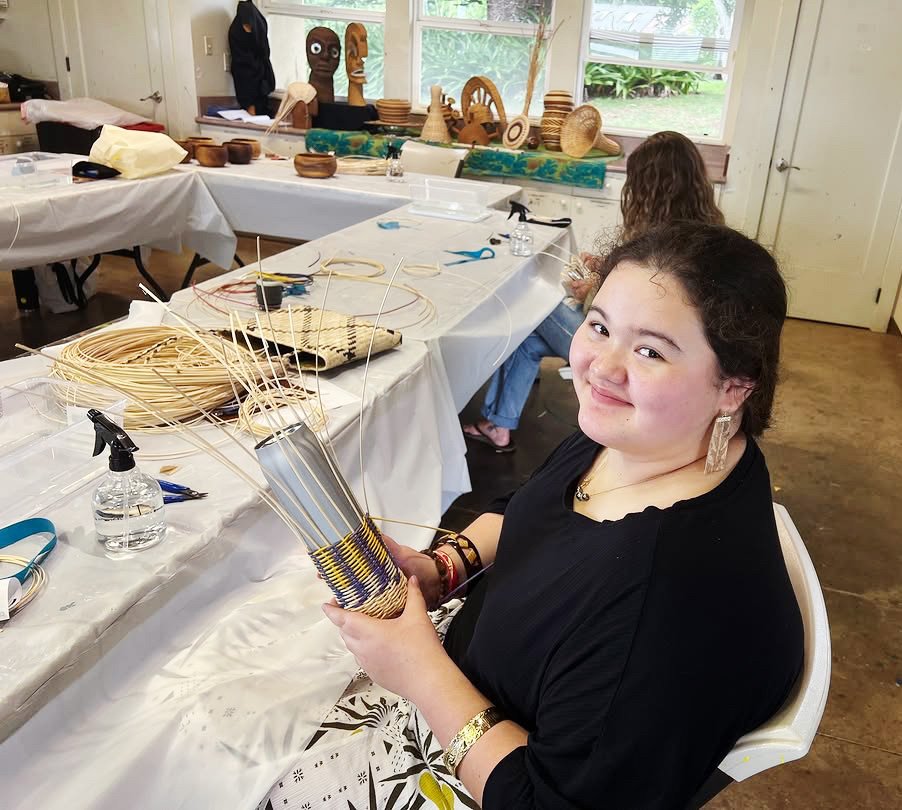
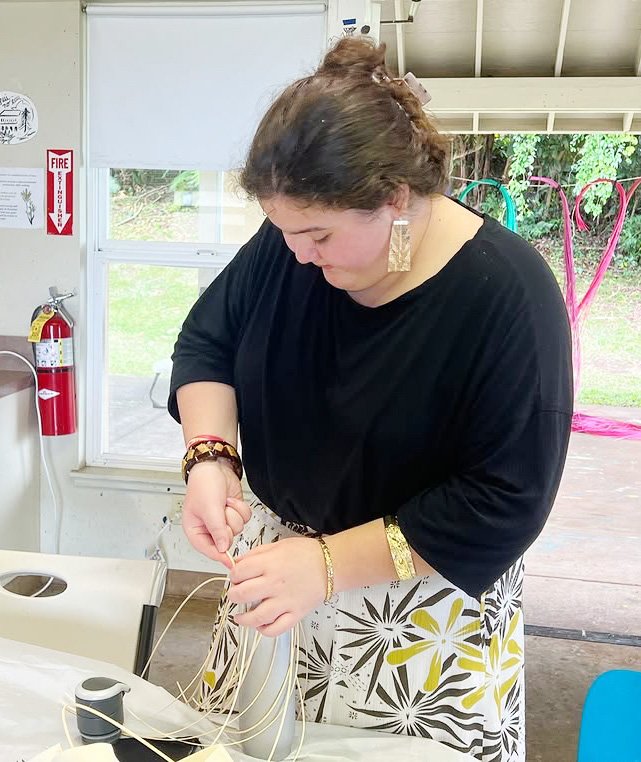
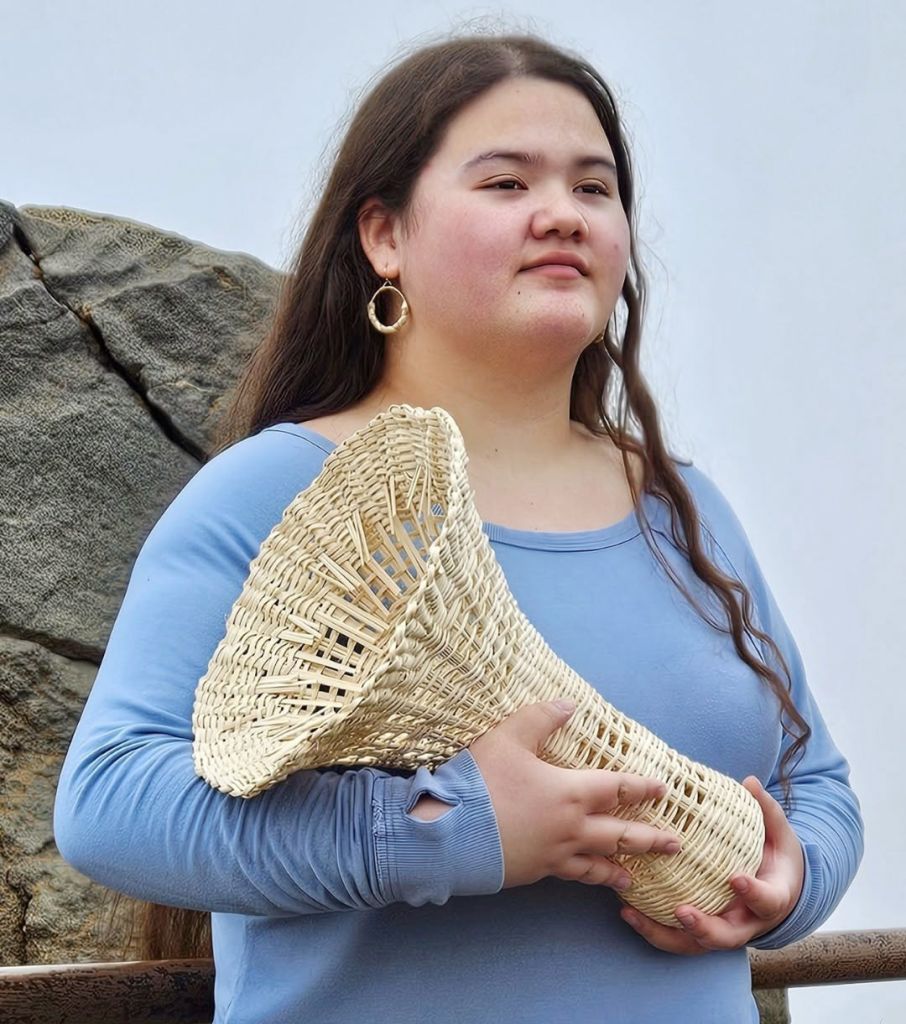
That started to shift two years ago, when she joined family friends in building a hale wa‘a, a traditional canoe house. The experience introduced her to hands-on cultural work and opened the door to what would become her central focus: ulana ‘ie, the traditional and endangered art of weaving using the ‘ie‘ie plant
Last year, Keola became one of three haumāna selected for the inaugural Ka Ulana ‘Ie Maui Junior Cohort, a four-month intensive program that immersed students in weaving technique, as well as the cultural meaning of the practice through pule, oli, and ‘ōlelo Hawai‘i.
Ulana ‘ie is not widely documented, and only a small number of practitioners carry the knowledge forward. For Keola, that reality brings responsibility.
“When you start learning and realize there are so few practitioners, it comes with the responsibility of teaching it,” she says.
It is also why she is thoughtful about the language used to describe the work.
“People call us cultural practitioners, but that’s just because it’s the most digestible term,” she says, “We don’t practice — we do.”
At HTA, Keola has been able to pursue this work in ways that align naturally with the school’s career-based learning model. Rather than separating academics from lived experience, HTA has supported her in weaving her cultural commitments — intensive programs, sailing, and teaching at conferences — directly into her education. Keola credits that flexibility and trust with allowing her to fully engage in ulana ʻie while continuing to grow as a student.
That growth has not gone unnoticed. Her counselor Mrs. Atay loves hearing what she calls Keola’s “chicken skin moments” — stories Keola shares after cultural conferences, weaving gatherings, and family workshops centered on Hawaiian ‘ike.
Keola “can appear quiet at times, but possesses a sincere and tenacious commitment to Hawaiian culture and access to Hawaiian ‘ike for youth,” Ms. Atay says.
She adds that while Keola used to be tentative about getting involved, she has become a completely different person — one who holds her head high and commits to learning in impactful, project-based ways.
Looking ahead, Keola hopes to attend UH-Mānoa to study cultural anthropology and become an ethnographic historian. But one thing is certain: she will continue ulana ‘ie, staying rooted in her community and carrying the knowledge forward in a way that puts her Lāhui before all else. For Keola, learning is not something to rehearse or collect — it is something to live, and to do.